
Website vs Automation: What Should You Fix First?
You know something needs to change, but should you fix your website or automate your workflows first? Here's how to decide based on where you're losing the most.
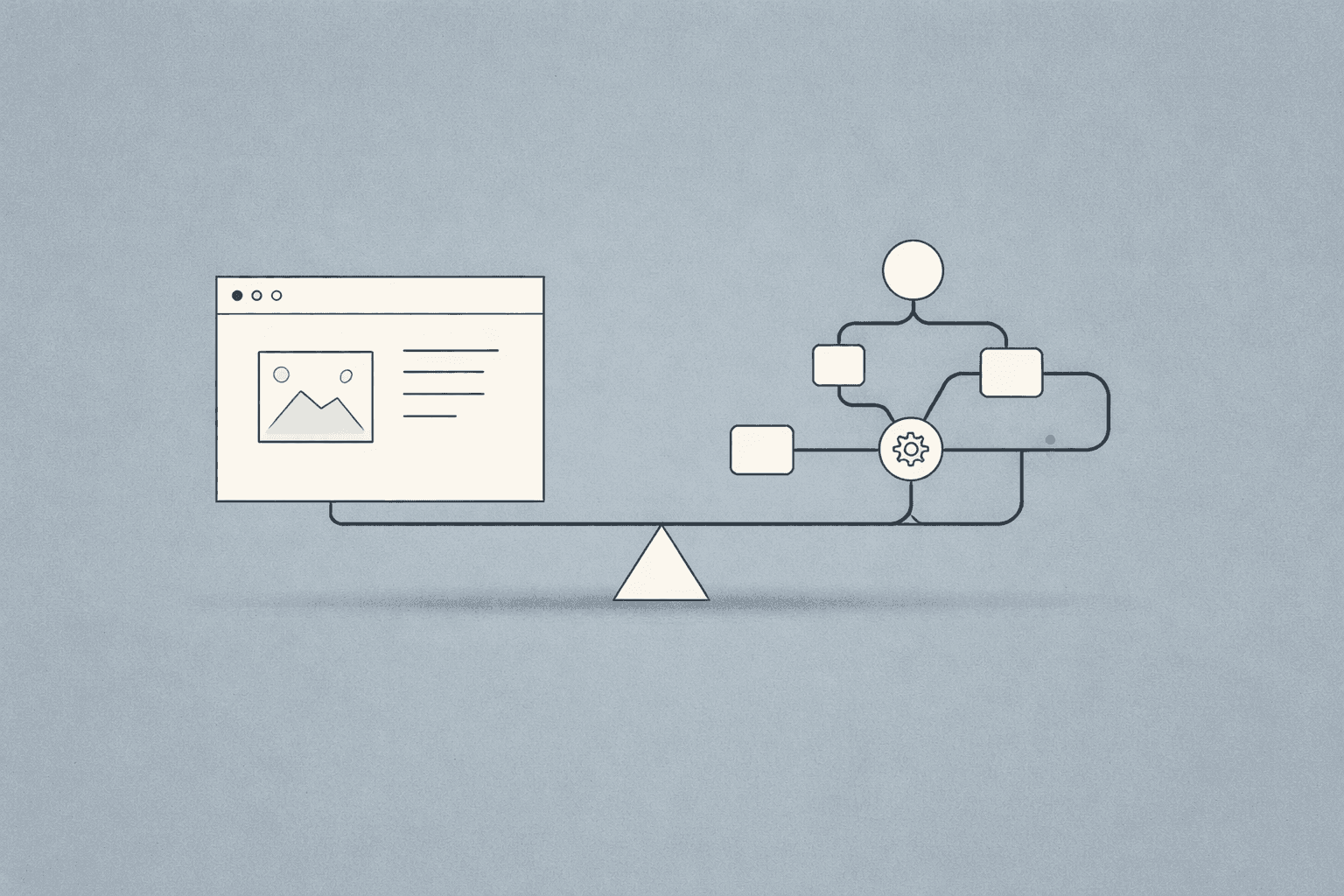
You have $5,000-$10,000 to invest. Your website looks like it was built in 2015. Your team spends 15 hours a week on tasks a robot could handle. Something needs to change.
But you can't fix both at once.
So which one do you tackle first: the website (what customers see) or automation (how your team operates)?
Use this decision framework to figure out where you're actually losing money—and fix that first.
The Quick Answer: Fix What's Bleeding First
Fix your website first if:
- You're getting traffic but not converting
- Your site looks unprofessional or outdated
- It's slow, broken, or hard to navigate
- You don't have clear calls-to-action
- Prospects tell you they couldn't find what they needed
Fix automation first if:
- You're getting leads but losing them in follow-up
- Your team spends hours on manual data entry and admin work
- Things fall through the cracks (missed appointments, forgotten emails)
- You can't scale because operations are chaos
- You're hiring people just to do repetitive tasks
When Your Website Is the Problem
Your website is the problem if you have this pattern:
- Traffic is coming in (from ads, referrals, SEO)
- But bounce rate is high (people leave immediately)
- Conversion rate is under 2%
- You're embarrassed to send prospects to your site
What this means: You have demand, but your site isn't doing its job. It's either confusing, slow, or doesn't communicate value clearly.
Real example: Northern Virginia contractor
A contractor was spending $1,200/month on Google Ads. Traffic was solid—300 visits/month. But only 2 people filled out the contact form. Conversion rate: 0.6%.
The problem? The website was a disaster: generic Wix template, zero trust signals, buried contact form, 8-second load time on mobile.
The fix: Rebuilt the site with clear service pages, before/after photos, embedded calendar booking, and optimized hosting. Same $1,200 ad spend, same 300 visits—but now getting 18 leads/month. Conversion rate: 6%.
ROI: $6,000 to rebuild. Paid off in 5 weeks.
If you're in this boat, start with your website.
When Automation Is the Problem
Automation is the problem if you have this pattern:
- You're getting leads, but following up takes forever
- You or your team are overwhelmed with admin work
- Leads go cold because someone forgot to respond
- You're manually doing the same thing 10+ times a week
- Growth feels impossible without hiring more people
What this means: Your front-end (website, marketing) is working. But your back-end operations can't keep up.
Real example: DC consulting firm
A small consulting firm was getting 40 leads/month from referrals and their website. Closing only 5. Close rate: 12.5%.
The problem? Response time was 2-3 days. They manually logged everything into spreadsheets. Scheduling took 5 emails per lead. Half the leads never got a response at all.
The fix: Automated lead routing (form submissions go straight to CRM + Slack notification), embedded Calendly for instant scheduling, built a 3-touch follow-up sequence for warm leads.
Result: Response time dropped from 2 days to 10 minutes. Close rate doubled to 25%. Same website, same traffic—just better operations. 10 deals/month instead of 5.
If you're in this boat, start with automation.
The Decision Tree
Use this simple decision framework:
Question 1: Are you getting traffic?
If NO: Fix your website first. If no one is finding you, the best automation in the world won't help.
If YES: Move to Question 2.
Question 2: Are you converting traffic into leads?
If NO: Your website is the problem. People are visiting but not taking action. Fix the site.
If YES: Move to Question 3.
Question 3: Are you converting leads into customers?
If NO: Your operations are the problem. You're getting leads but dropping the ball. Fix automation.
If YES: Congratulations, your funnel works. Now optimize for scale by improving both.
What If Both Are Broken?
If both your website and operations are a mess, here's the order:
Step 1: Website
Fix what customers see first. Even if your operations are chaotic, a good website will bring in leads. A bad website won't, no matter how good your back-end is.
Step 2: Light Automation (Quick Wins)
Don't build complex workflows yet. Start with the basics: form submissions go to your CRM, Calendly link for scheduling, automated follow-up emails.
Cost: $2,000-$3,000 for basic integrations.
Step 3: Deep Automation
Once leads are coming in and you've validated your offer, invest in deeper automation: multi-step workflows, pipeline management, reporting.
One More Thing: The 80/20 Rule
Don't over-engineer either one.
- Website: You don't need a $50,000 custom site. You need a clean, fast site with clear messaging and a contact form that works.
- Automation: You don't need to automate everything. Start with the 3 tasks that eat the most time.
Aim for "good enough to grow", not perfect.
Final Thought
Your website brings leads in. Automation keeps them moving.
If you don't have leads, fix the website. If you have leads but they're slipping away, fix automation.
Most small businesses in DC and the DMV need both eventually. But doing them in the right order saves months of frustration and wasted budget.
What to Do Next
If your website feels outdated, confusing, or weak at converting visitors, start with website design so the market sees a stronger first impression.
If leads are already coming in but getting lost after the form, move into AI automation and pair it with this lead follow-up guide.
Not sure which one to tackle first?
Cordexa helps small businesses in the DMV prioritize website and automation investments based on where you're actually losing leads. Let's figure out what to fix first.
Talk to Us→